Counterfeit perfume can rarely be confirmed by looking at the bottle, cap or box, because a visible design can be copied. A visual check raises the suspicion; the answer comes from reading the sales channel, the batch record and any invisible mark the brand has placed on the product together. For a brand, the real work is deciding who runs that check, and where, before a suspect product turns up.
How organised is counterfeit perfume production?
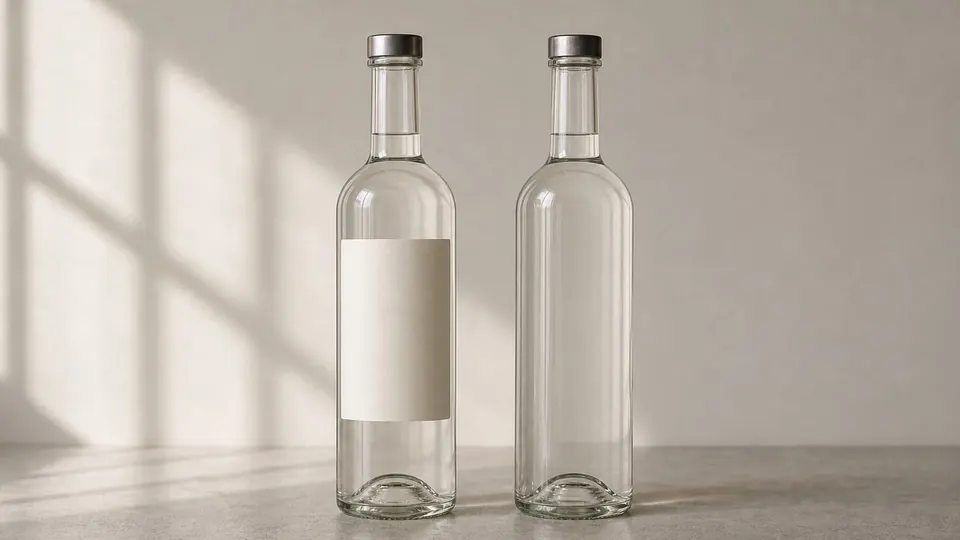
On 21 October 2026, the Istanbul Provincial Gendarmerie raided two addresses in the Bayrampaşa district that had been converted into production sites. They seized 120,115 counterfeit perfumes carrying famous brand names, with a declared market value of 350 million Turkish lira. The same sites held 56,864 empty bottles, 9,664 empty boxes, 489,450 production and packaging items, 11,680 litres of ethyl alcohol, 550 litres of perfume essence, and filling and capping machines.
That inventory shows how the work is done. Bottles, caps, boxes and liquid are sourced separately, then brought together in something close to a filling line. An officer at a 2017 Istanbul raid described the outcome in similar terms: the fakes were made identical, "from the boxes to the barcodes".
For scale, EU data is available. A 2015 EUIPO study estimated that counterfeiting costs the perfume and personal care sector about €4.7 billion a year in the EU, or 7.8% of sector sales. We did not find an equivalent figure for Türkiye produced with the same method.
What does each check actually tell you?
| Check | What it shows | Its limit |
|---|---|---|
| Box print and cellophane | Filters out crude copies | A good copy passes |
| Bottle, cap and spray head | Mould and finish differences give clues | Hard to compare without a genuine reference in hand |
| Batch or serial number | Consistency between bottle, box and batch record | Numbers can be printed too; a match alone proves little |
| Responsible person and address | Whether the label meets the rules | The text can be copied |
| Scent and longevity | Raises suspicion | Subjective, not a basis for a decision |
| Sales channel and invoice | Whether the product came through the authorised chain | Genuine goods can also sit in the wrong channel |
Label content has a legal basis. Article 22 of Türkiye's Cosmetic Products Regulation lists the name or registered title and address of the responsible person, along with the manufacturing batch or serial number that identifies the product. Missing information is a serious warning sign. Complete information is not proof of authenticity.
In what order should a channel manager handle a suspect product?
- Ask about the source. Who supplied it, and on which invoice?
- Check the batch record. Was this batch produced, and was it shipped to this channel?
- Compare bottle and box. Do the numbers match each other and the record?
- Read the invisible mark. If the brand uses one, read the box and the bottle separately.
- Keep the record. Note the product, place, date and person who checked, and set the item aside.
- Decide the next step. Doubts about content go to a laboratory; legal action belongs to the brand's counsel.
Should the invisible mark be on the bottle or on the box?
A visible design can be copied. An invisible signature cannot be seen, so a copier does not know what to copy. That logic holds for the box and for the bottle, and using both produces information that neither gives alone. When box and bottle carry separate signatures, the readings can be interpreted like this:
| Situation | Box | Bottle | Reading |
|---|---|---|---|
| Product from the brand | Present | Present | Box and bottle both belong to the brand |
| Full copy | Absent | Absent | The product did not come from the brand |
| Genuine bottle, different box | Absent | Present | The box was changed; a repackaging or channel question opens |
| Different bottle, genuine box | Present | Absent | The box may have leaked or been reused |
| Refilled genuine bottle | Present | Present | The reading may pass; content needs a separate check |
The last row is the limit of the method. A signature shows the source and does not analyse the liquid. If a genuine bottle can be refilled without damaging the cap, a reading alone will not catch it. A signature on the cap and a laboratory check narrow that risk.
What does marking a glass bottle depend on?
Glass does not absorb and it reflects, which can narrow the angle at which a reader can be held. On the box, the board structure and later steps such as varnishing and foiling affect the result. The decision comes from a trial on the product's own bottle and box: apply the signature, read it, put the product through its later processes and storage conditions, then read it again. For perfume, alcohol spills and shop lighting belong in those conditions. We cover surface selection in which signature goes on which surface.
Who should read the mark, and where?
Perfume passes through many hands, so checkpoints are chosen at the start:
- Distributor goods-in: a suspect shipment is set aside before it reaches the shelf.
- Store and regional visits: the field team reads on the shelf.
- Returns desk: staff see whether a returned product came from the brand.
- Customs checks: the right holder's representative gets an on-the-spot answer beside the detained goods.
- Marketplace test purchases: the purchased item is read and the result recorded.
Who holds a reader is a separate decision, because a covert mark draws its strength from the small number of people able to read it. We discuss that in verification for your field team, and products appearing in the wrong market in the grey market article.
What does Lumvex do here?
Lumvex uses a luminescent signature, invisible to the naked eye and used only for you, which can be applied during box and label printing or on a product surface such as the bottle. Box and product can carry separate signatures. It is read with a handheld reader in the field or a phone attachment at the dealer, and every reading is recorded with the product, place and person. Lumvex does not analyse the contents. See the cosmetics page for sector detail.
Sources
- Timeturk: 350 million lira counterfeit perfume operation in Bayrampaşa, October 2026
- Posta: Counterfeit perfume operation in Istanbul, March 2017
- TİTCK: Cosmetic Products Regulation (Kozmetik Ürünler Yönetmeliği)
- EUIPO: The economic cost of IPR infringement in the cosmetics and personal care sector, 2015